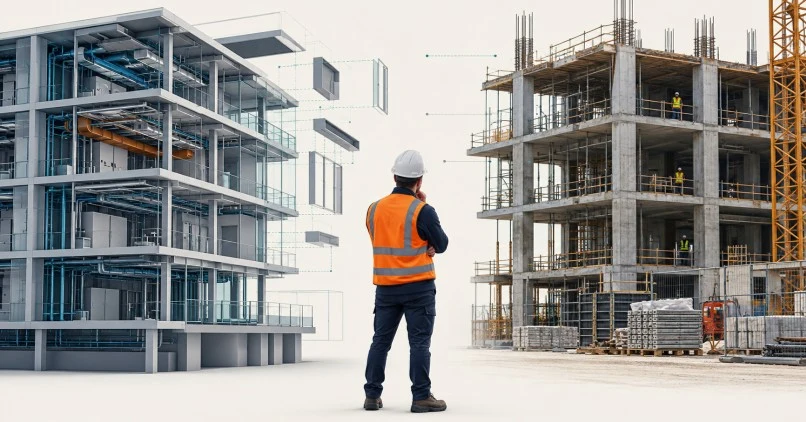
From Model to Decision
A model can be coordinated.
The site can still be unready.
Consider a services zone that looks resolved in the model. The approved detail may be missing. The preceding trade may not have finished. Access may be blocked. The team may still be waiting for a decision.
For me, BIM becomes a project-management tool when it helps answer the questions behind that work package:
What exactly is included?
What needs to happen first?
Which interface remains unresolved?
Who is responsible for the next action?
What evidence makes it ready for release?
This is the practical question behind my ongoing BIM-to-schedule research: how can model information become clear work packages and reviewable construction logic, rather than another disconnected visual?
I am interested in the link between information and accountability — not simply in generating more activities.
The workflow remains under development. Any resulting programme needs planner review and approval before project use.
As a Construction Project Manager, I see my role as bringing design, planning and site teams to a decision they can actually act on.
The model informs the conversation. People remain accountable for the decision.
Where does that handover break down most often on your projects: scope, sequence or ownership?
Concept visual series — fictional scenes, not photographs of my projects or team.
Accompanying visuals